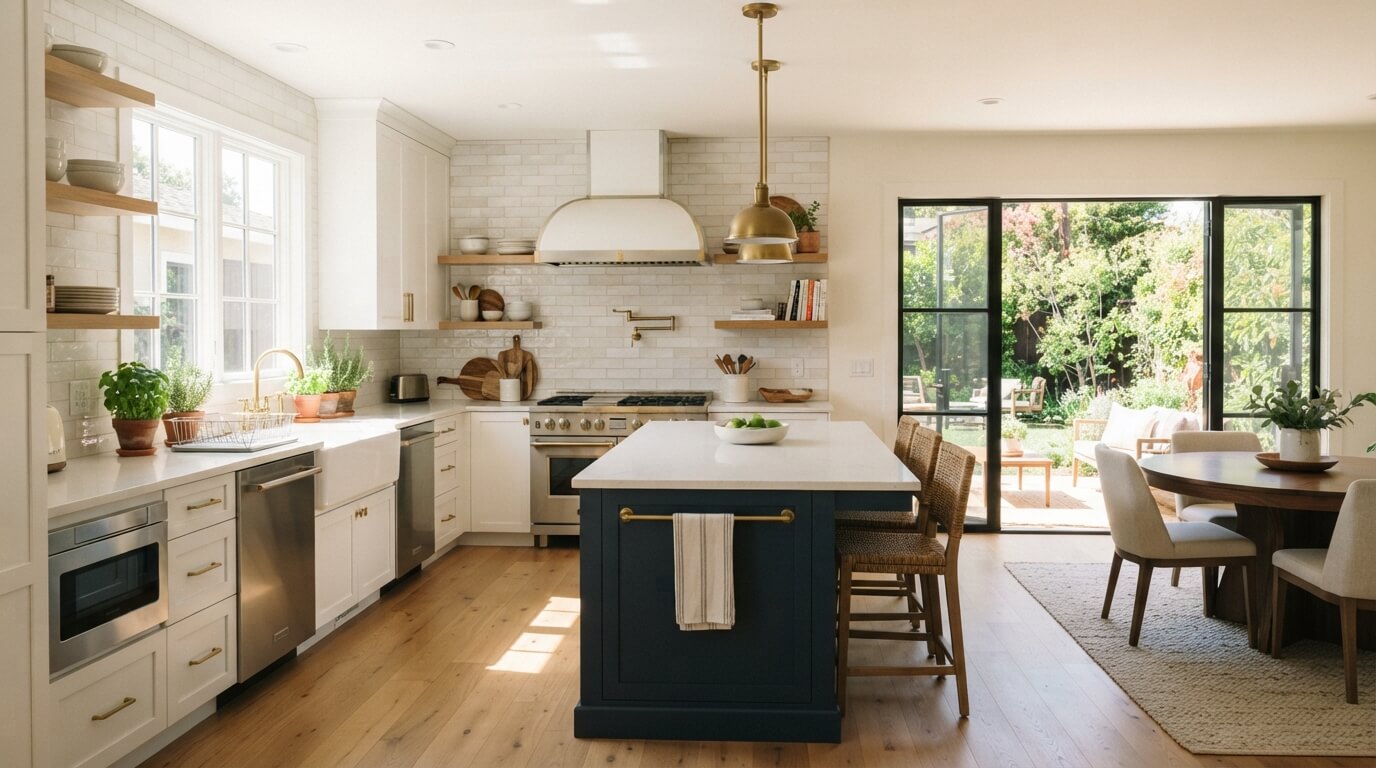
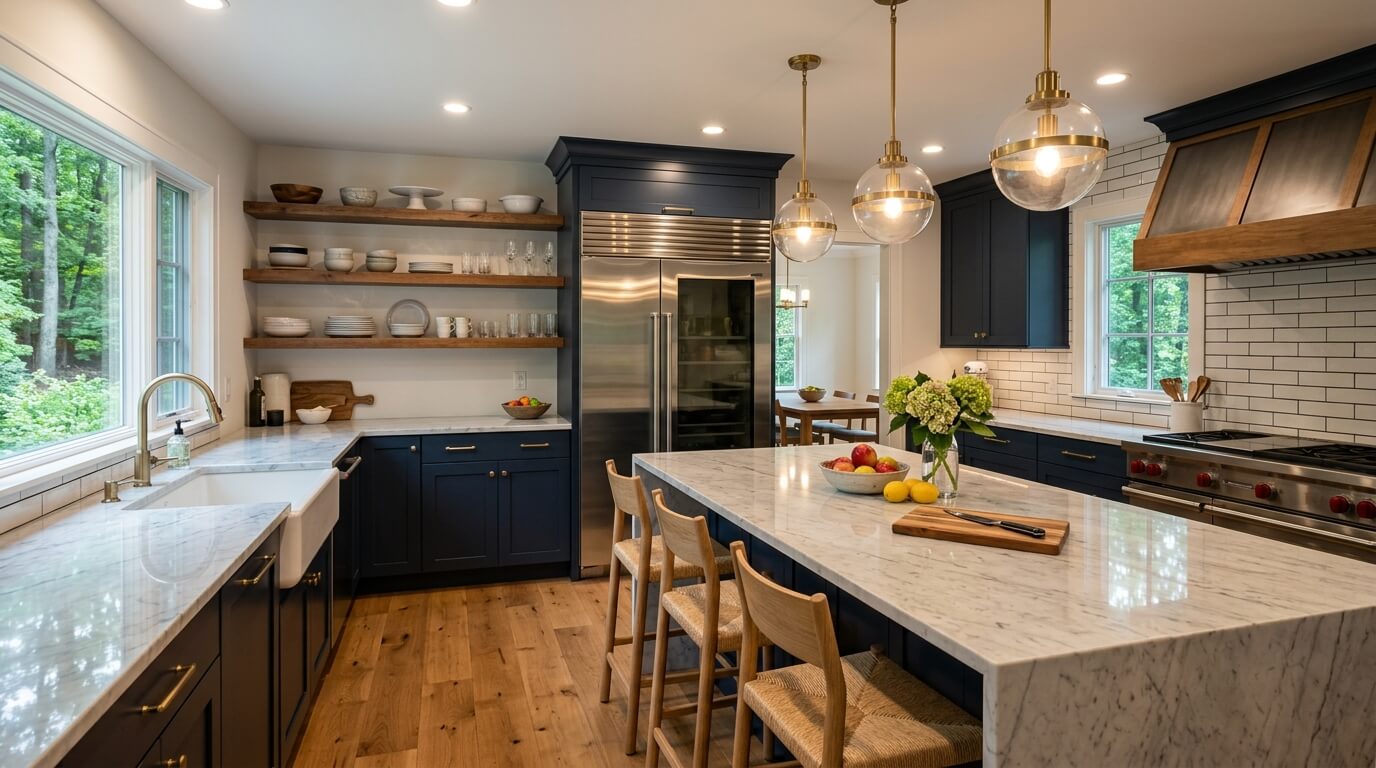
Half the kitchen stories online start the same way: signed, paid thirty percent, texts unanswered. The rest are the kitchen that looked fine until the grout cracked at six months and the contractor blamed the house. When you call this site about a kitchen, we connect you with one licensed remodeler who has done kitchens across northern Westchester and Putnam for years, measures in person, and gives you a written price with the exclusions listed before you are asked for a dollar. The deposit is small and tied to milestones. The permit goes in their name with the Town of Yorktown. Whatever warranty they offer is written into the contract. Call (914) 228-6746 and tell us about the kitchen.
If this sounds familiar
The deposit and the silence
You signed, you paid, the start date came and went, and every text gets "I will have it done within 2 days."
Here the deposit is a fraction of the job, the contract has a start date and a schedule, and the contractor's name, license and number are on the paperwork before any money moves.Six weeks became three months
The crew shows up two days a week because they are stretched across five jobs, and your kitchen is a plywood counter and a hot plate.
Ask how many jobs are running at once. The remodeler we connect you with tells you how many jobs are running and puts the cabinet lead time in the contract before you sign.It looked fine until it did not
Tile popping, a cabinet door chipping at six months, a gap under the island you can fit your fingers in, and "that isn't due to the work his team did."
Cabinets go on shimmed, level boxes. Tile goes on a flat, sound subfloor. Warranty terms are written into the contract, and the punch-list visit is part of the job, not a favor.The three things people are actually afraid of, answered
Will this person take my money and disappear?
The pattern is always the same: a big deposit, a vague scope, and a contractor with no license to lose. So the contractor we refer you to gives you a written itemized estimate after measuring, a contract with a schedule, and a deposit sized to order materials, not to fund someone's other job. Their Westchester home improvement license number is on the contract. You check it before you sign.
ProofWritten estimate after an in-person measure, license number on the contract, payments tied to milestones with the last one after the punch list.
If something goes wrong after, will anyone come back?
Cracked grout at six months, a door that will not close, a seam that lifted. Warranty terms are in the contract, not a handshake. And because the referral came through this site, the contractor answers to two people if they go quiet: you, and us.
ProofWarranty terms written into the contract. Punch-list visit scheduled before the final payment. This site stays reachable at (914) 228-6746.
Am I about to miss the red flag everyone else missed?
The red flags people list after the fact: a massive down payment, "we can skip the permit," a photocopy of an insurance certificate instead of one from the insurer, a price far below everyone else's, and wishy-washy answers before you have even signed. Every one of those is a question you can ask on the first visit. The contractor we connect you with expects them.
ProofCertificate of insurance from the insurer on request. Permit pulled in the contractor's name. Recent local kitchens you can ask about.
What it costs, plainly
Nobody in the local threads posted a kitchen price, which is its own tell. Here is what moves the number in a Yorktown kitchen, and what the contractor's estimate will list line by line. Every figure below is a typical range for northern Westchester and is confirmed on the visit, not over the phone.
| Cabinets | The biggest line. Stock boxes at the low end, semi-custom in the middle, custom at the top. Regret threads say the extra for semi-custom was worth it; stock with good hardware is fine for a rental. |
|---|
| Counters | Quartz is the default now. The estimate lists the slab allowance and the fabrication separately so the allowance is not mistaken for the price. |
|---|
| Opening a wall | Non-bearing wall in a colonial: modest. Bearing wall in a split-level: an engineer, a beam and a permit. The contractor tells you which on the first visit. |
|---|
| Plumbing and electrical | Moving the sink or adding an island outlet means a licensed sub and a permit. Keeping the sink where it is saves real money. |
|---|
| Floors | Oak under the old vinyl can often be refinished instead of replaced. Tile means the subfloor gets checked for flatness first. |
|---|
| Deposit | A fraction of the contract at signing to order cabinets, then milestone payments. Half or more up front is the red flag. |
|---|
The estimate you get lists what is included, what is excluded, and what happens if something is found inside the wall. Change orders are written and approved before the work, not added to the final invoice.
Kitchens in Yorktown houses
The typical Yorktown kitchen is ten by twelve, closed on three sides, with a window over the sink looking at the oaks and a wall between it and the dining room that everyone wants gone. In a center-hall colonial that wall is usually not bearing. In a split-level or raised ranch it often is, because the upper floor sits on it. The contractor checks the framing before promising an open plan, and if a beam is needed, that is designed and permitted, not improvised.
The Town of Yorktown Building Department wants a permit whenever plumbing or electrical moves or a wall comes out. Cabinet and counter replacement in place, paint and flooring do not usually need one. Houses on well and septic need the drain plan checked before a bigger sink or a second dishwasher goes in. Cabinet lead times from the supply houses on Route 6 and in Mount Kisco run four to twelve weeks, which is the single biggest reason a kitchen schedule slips, so it goes in the contract as a date.
What happens after you call
1
You call or send the form
Tell us the room, the town and what is bothering you. A person answers during business hours at (914) 228-6746.
2
We match you with one remodeler
Kitchens and whole-home work go to one licensed contractor, bathrooms to another. Each one works in your town, not from a call center.
3
They come measure and write it up
The contractor visits, measures, and gives you a written itemized estimate. You are under no obligation to book.
4
You decide
Compare it, ask questions, take your time. If you book, the contract and the work are between you and the contractor.
The smaller worries
The mess
Floors and stairs get covered before demolition, the dumpster goes on the driveway not the lawn, and cleanup is part of each day, not a separate line you are asked to pay a cleaner for.
The things people regret
Outlets in the island. Everything on dimmers. An undermount sink. Spending on the things you touch every day, cabinets and the faucet, over the things you look at. The contractor raises these on the first visit because they are cheap to add then and expensive after.
Cracks and pops
Tile that pops at six months went over a subfloor that moves. Grout that cracks at the backsplash met a counter that was not level. Both are prevented by the boring part of the job, the flat and level prep, which is why it is in the estimate.
From the blog
Related work
Last updated September 29, 2026